
























Win! Company! Merchandise!

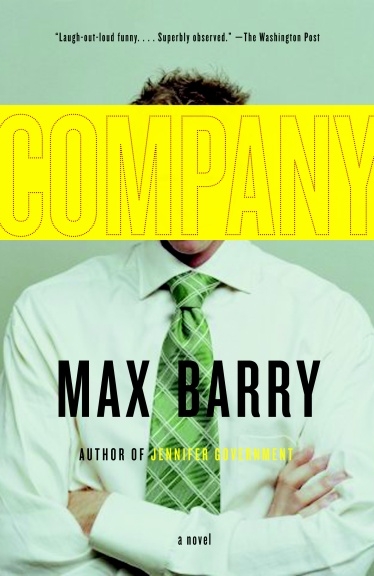
 Doubleday
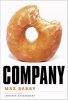
has made up some Company coffee cups and Mission
Statement posters and I’m allowed to give five away. This is
fantastic, because usually this stuff goes to uninterested magazine
editors already drowning in book-related collateral, and not to fans,
who would stab their own mothers for it.
Doubleday
has made up some Company coffee cups and Mission
Statement posters and I’m allowed to give five away. This is
fantastic, because usually this stuff goes to uninterested magazine
editors already drowning in book-related collateral, and not to fans,
who would stab their own mothers for it.
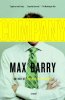
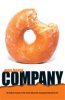
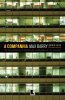
It’s like this: Company is set within a fictional corporation named Zephyr Holdings, and Doubleday’s cups and Mission Statements have Zephyr logos on them. There’s no mention of me or the novel, which seems a little odd for promotional merchandise, but then it does make them even more cool and obscure.
If you’d like to win a coffee cup and Mission Statement poster, all you need to do is get yourself on my mailing list. You can uncheck the relevant boxes so you don’t get my blogs by e-mail, if you want: the important thing is that you be on that list, and have followed the instructions to validate your email address. Don’t join multiple times, or I’ll disqualify you.
On Monday January 9th, 2006, I’ll randomly select five people from the mailing list and e-mail them. If I don’t get a reply or at least a vacation autoreply within a few days, I’ll draw somebody else.
Thanks to Doubleday for making this possible! It’s very cool of them.
(Note: I know from experience that a bunch of you are going to write in saying how much you’d love a Company coffee cup and you once had a Snoopy coffee cup but it got broken and through some process I can’t quite follow only a Company cup will make your life whole again so can I please just slip you one on the side. But I’m sorry, I can’t: I only have five to give away.)
Update: To clarify, yes, naturally everyone already on the list is automatically eligible.
 47 comments
I Was a Teenage Lawn Mower
 I grew up in Stratford, a tiny town in Gippsland, Victoria, where there are ten cows
for every human being. Stratford is known primarily for being just ten miles away from
Sale, and Sale is known primarily for its maximum-security prison, so that was my youth:
trudging ten miles to school every morning while watching carefully in case murderers were
lurking behind cows, waiting to leap out and grab me.
I grew up in Stratford, a tiny town in Gippsland, Victoria, where there are ten cows
for every human being. Stratford is known primarily for being just ten miles away from
Sale, and Sale is known primarily for its maximum-security prison, so that was my youth:
trudging ten miles to school every morning while watching carefully in case murderers were
lurking behind cows, waiting to leap out and grab me.
I mention this because I was recently reminded of my lawnmower experience. In fact, every time I see my mother or stepfather, I get reminded of my lawnmower experience, because somehow a couple of tiny incidents in my teenage years have bloomed into legend. I am most unfairly portrayed in this legend, so I’m setting the record straight here, where members of my family are unable to respond.
Despite owning more acres of grass than Bob Marley, we didn’t have a ride-on mower. We had a push mower, one so ancient and temperamental that it wouldn’t start with less than ten minutes of gentle caresses and ego-stroking. Or, when that failed, judicious application of a hammer. I frequently complained about this, but my parents just thought I was whining. Which, clearly, I was. But with excellent reason.
One time when I was about 16, I just could not start the thing. I’d tried whispering sweet nothings, touching its most intimate places, the hammer—all the seduction techniques popular in Gippsland—but couldn’t get a response. Finally, exhausted, I went inside to declare the impossibility of completing my assigned lawn-mowing duties. But rather than being sympathetically consoled as you might expect, my mother responded: “I don’t care! I don’t want to hear about it, Max, just mow the lawn!”
Already, I’m sure you’ll agree, there was enough unfairness here to keep a regular teenager moping for days. But being a dutiful son, I pondered upon my dilemma until I came up with an ingenious solution: I got out a pair of hedge clippers and began to slowly move across the vast expanse of our lawn, cutting approximately three blades of grass per snip. My mother saw this out the window, but—inexplicably—rather than marveling at what a plucky, dedicated lad she was raising, she interpreted the scene as some kind of surly teenage rebellion and yelled at me to go borrow the neighbor’s mower, if I couldn’t get ours started.
I was a little hurt at having my clever hedge-clipper idea rejected, but, being always happy to help, was willing to give this mower-borrowing idea a run. And run I did, because by now it was almost dark. I had to race over the neighbors—if I remember right, this was several miles away, around several cows and an escaped serial murderer—then race back and sprint around our lawn with the mower while the darkness closed in.
By now you, like me, no doubt have tears in your eyes at my incredible courage and determination. But somehow my family don’t see it that way: oh no, to them, me running around in the dark with the neighbor’s mower is a classic example of how I would do anything to get out of mowing lawns.
I guess what they say is true: you never understand your family. But I know this: as soon as I moved away to college, they bought a ride-on mower.
Story ARCs
A few months before a book is published, Advanced Reader Copies,
otherwise known as ARCs, start floating around. These are slightly
shabby-looking versions of the final book, mailed out to
people in the media so they can get a review into print by the time
the book goes on sale.
ARCs have “NOT FOR SALE” printed on them, but of course there is a bustling mini-market, fed by critics who don’t particularly want to hang on to dozens, hundreds, or even thousands of books. So the ARCs find there way onto ebay* or into second-hand bookstores. If you’re dying to get your hands on a particular novel, these ARCs can look very tempting. But should you buy one, or hold out? Let Uncle Max be your guide.
Neither the author nor the publisher sees any money from sales of ARCs. This may not bother you, and I sure don’t consider it a hanging crime—if publishers didn’t think ARCs were a net generator of sales, they wouldn’t produce them, right?—but you should be aware of it. I know a few readers who shelled out big bucks for ARCs thinking some of that money was going to end up with me. In fact, it doesn’t even count as a sale. Your cash goes only to the retailer and the critic who originally bounced it along.
(I have to admit, there is something annoying about the idea that a critic might get a free copy of my book, write a crap review of it, and then—because they don’t like it, you see—sell it on ebay to someone who otherwise would have bought a real copy. That’s like gouging my eyes and then kicking me in the nuts.)
The other issue with ARCs is that they’re advanced—that is, they’re printed before the final round of edits. In the case of Company, you get 99.5% of the story, but you also get a sprinkling of typos and clumsy sentences I only fixed at the last minute. I made around 50 minor changes in final edits, and while you’d struggle to spot most of them, I made those changes for a reason. A few are reasonably significant; I also inserted a new joke that, while perhaps not a world-beater, amuses me.
Then there’s looks: the ARC has low-grade artwork that I did on my word processor, while the real thing features slick stuff from Doubleday’s art department. The ARC is also missing that jacket copy I sweated over, and is a somewhat fragile paperback, having not been designed for long-term use.
This shouldn’t prevent you from buying an ARC, if that’s what you want. They make good collectors’ items, since, relatively speaking, there are so few of them. (Even I don’t have a Syrup ARC any more.) But if you’re after the story, I think you should wait for the real thing. Don’t pay ten or twenty or (dear God) thirty bucks for an ARC. For that kind of money, you shouldn’t settle for a draft.
* (Some sellers on ebay don’t make it clear that they’re selling ARCs. There are two right now that make no mention of this at all. But they are, because the real things haven’t been printed yet.)
More International Jens

 My
local delivery guy is very impressed with my parcels.
When he comes to deliver a box, he says,
“It’s from New York,” his eyes filled with awe,
as if New York is a magical, mythical place, floating above
the rest of the world on the back of a giant turtle
and inhabited by knights and princesses, none of whom
send packages. And this guy is an international
courier. He must be exhausted when he gets home at nights,
after reading all those thrilling exotic addresses.
My
local delivery guy is very impressed with my parcels.
When he comes to deliver a box, he says,
“It’s from New York,” his eyes filled with awe,
as if New York is a magical, mythical place, floating above
the rest of the world on the back of a giant turtle
and inhabited by knights and princesses, none of whom
send packages. And this guy is an international
courier. He must be exhausted when he gets home at nights,
after reading all those thrilling exotic addresses.
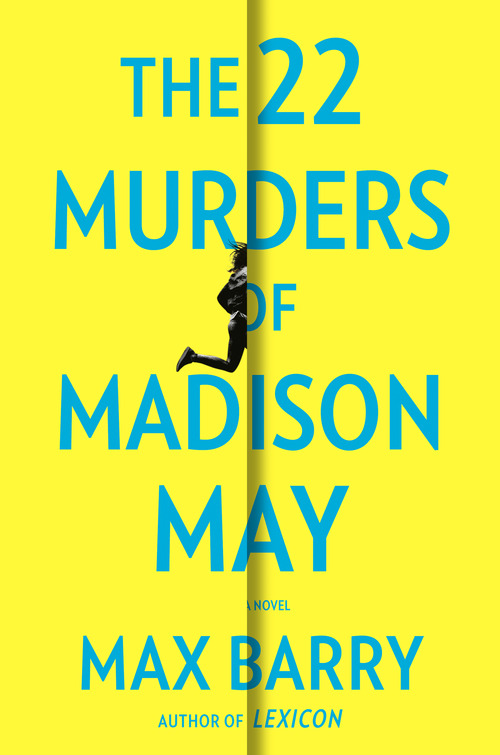
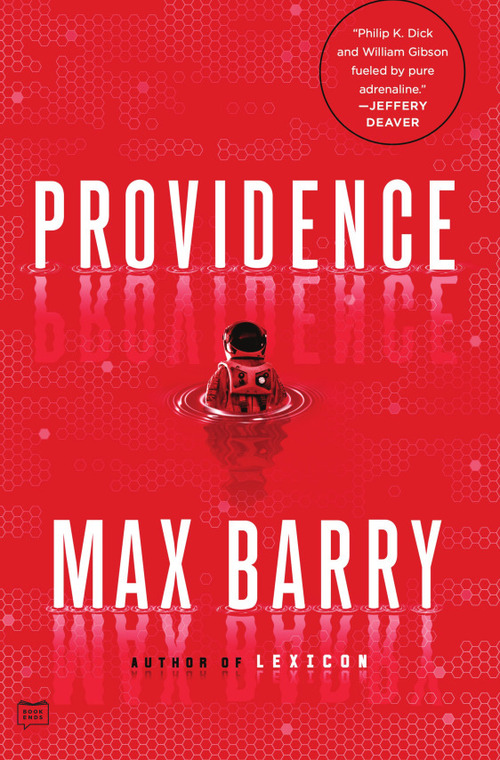
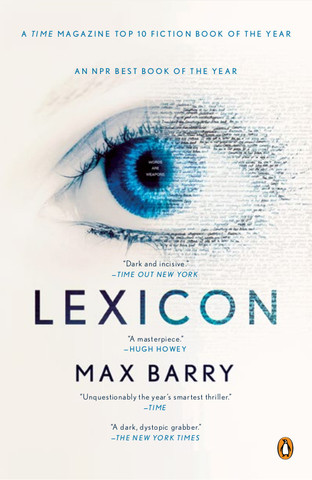
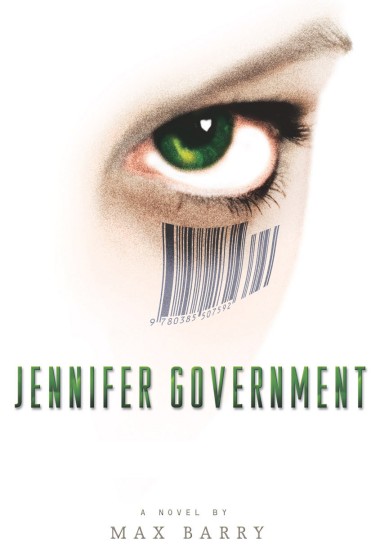
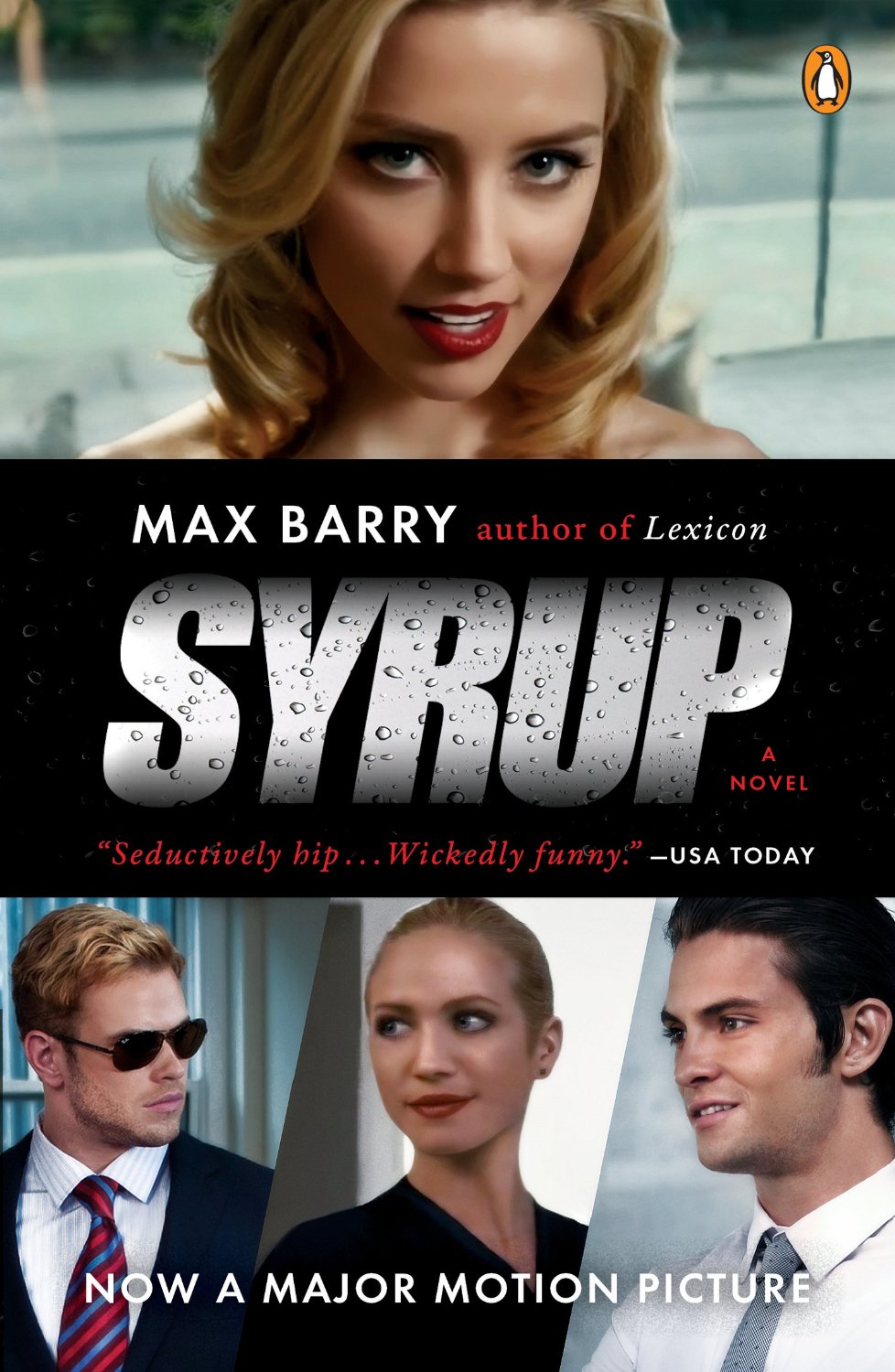
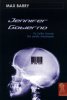
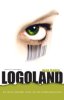
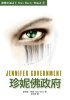
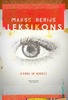
But my latest box was exciting, because it had some foreign editions of Jennifer Government fresh off the presses from Spain and Brazil. The Spanish one was especially cool, because I didn’t know it was being published there. But, unless this is some kind of elaborate hoax, I guess it is.
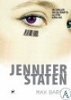
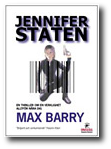
Foreign editions usually come as a surprise to me, because the chain of people required to pass along the news is longer than two, which I’ve worked out tends to be the practical limit. For example, I discovered that there’s a truly amazing Swedish edition courtesy of site member Kalle, who posted the details in the comments here. Kalle was even better than my publisher would have been, supplying a translation of the blurb:
Jennifer Staten is a hard and breathtakingly funny thriller. The government agent Jennifer is struggling against baby-sitter problems in the same time as she has too save the world from aggressive marketing methods like torture, mass murder and strategic nukes… A satire from the wonderful world of the big companies, not too unlike from our own…
The 32-year old bestseller author Max Barry is probably the worst that has happened to the big companies since Michael Moore.
He is definitely the best that has happened too SF-satire since George Orwell.
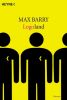
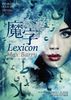
They say “definitely,” so you know it’s true. Unlike the references to torture and strategic nukes, which I’m pretty sure aren’t in any book I ever wrote. That’s a pretty interesting way to entice readers: advertise parts of it that don’t exist. I don’t know if that’s a sound way to build repeat readers. I’m also curious about their apparent targeting of people who are smart enough to know George Orwell, but gullible enough to believe I’m the best writer in 50 years. And as for that cover… well, at least that would seem to guarantee that very few people will be getting to the end of Jennifer Staten only to wonder, “Hey, where were the tactical nukes?”
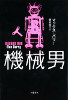
I also found out about a forthcoming Chinese version from the translator, a guy called Wayne Fan. I (eventually) wrote back to thank him for letting me know, and then, because I couldn’t resist, said:
I’ve always wanted my books to be translated by a Fan. (Boom boom.)
Wayne wrote back:
Thought you are too busy to return my Fan mails.
Nice. Should be a good edition, then.
US Tour 2006
Doubleday has nailed down my Company US book tour, so
if you’re interested in listening to me orally mangle my novel and
write amusing things on your copy, you’re in luck! Providing, of course,
you live in one of a very small number of cities:
- Los Angeles, CA
Wednesday January 25th, 2006 - San Francisco, CA
Thursday January 26th, 2006 - Seattle, WA
Saturday January 28th, 2006 - Portland, OR
Monday January 30th, 2006 - New York, NY
Wednesday February 1st, 2006
If you can’t make it, here’s the one-line summary: I’m taller and more Australian than you expect.
The Block

I’d love to be a published author, but I never seem to finish any of my stories. I write about 20-60 pages and then just kinda let the story die, and it is not for lack of trying…I really would love to finish a story, but I feel my life gets in the way. Where do you get the energy, drive, and determination to write a full length novel?
I avoid handing out writing advice on this site, because it’s hard to do without sounding like the world’s biggest blowhard. But I get this question so often that I’m going to blow anyway. (Forgive me.)
Disclaimer: I don’t think there’s any advice that’s going to work for all writers. Everyone does this thing differently; you need to find what works for you. Don’t devoutly follow any rule about writing… except this one. And the one about always relocating a few copies of my book to the front displays any time you’re in a bookstore. Yeah. Just those two.
I guess the first thing to realize if you’re stuck a few chapters into a novel is that this happens a lot. It doesn’t mean you’re untalented or undisciplined or not cut out to be a writer. I started a novel in high school that I thought was brilliant in Chapter 1, okay by Chapter 4, and after that didn’t want to think about. It died a slow, lingering death on my hard drive, but because I knew it was there, waiting for me, I didn’t want to write at all. It was a couple more years before I resolved to leave it behind and start something new: that one clicked for me in a way the other never had, and I finished it.
So the important thing is not to let this one problem derail you from writing. Maybe you can fix this story and maybe you can’t; either way, you have to keep writing.
I think there are three reasons you can lose enthusiasm for a novel. Let’s start with the ugly one: it was a weak idea to begin with. Maybe your premise isn’t well-suited to a novel; maybe it’s better as a short story or screenplay. Maybe it needs another key idea or two to fill out the concept. Or maybe you just thought this was going to be better than it turned out. In any of these cases, it often won’t help to blindly forge ahead and hope everything gets better. So let the novel sit for a while. Start writing something else. It doesn’t matter what. You might end up coming back to this novel with new ideas and a ton of motivation, but if you don’t, let it be because you’ve moved on to something better.
The second possibility is that your story has good fundamentals but you took a wrong turn. This can happen any time, but is more unsettling at the start because you have less confidence. A trick I use when suddenly I go from powering along to a dead halt is to delete the last sentence. Even if I think there’s nothing wrong with it: backspace backspace backspace. For some reason, this almost always immediately presents me with an idea for a new way forward. Sometimes I have to delete a paragraph or two, or (very rarely) even a whole chapter. I don’t know why the physical act of cutting part of the story away helps—I should be smart enough to work this out by just thinking about it, shouldn’t I? But apparently I’m not, and it does.
(I don’t plan my novels out in advance. If you do, this technique is less likely to help you. I hate planning novels; I think they’re much more fun to write when they evolve on their own. I tried planning a novel once and it was dull, dull, dull. (No, it wasn’t one of my published ones. Shut up, you.))
The third possibility is you’re being too hard on yourself. For a lot of writers, getting critical too early—and “too early” here probably means “before you’ve finished the first draft”, or at least 30,000 words—is a quick and effective way to kill your motivation. I’m lucky on this score, because I am blessed with a kind of split author personality: I have the writer guy and the editor. The writer guy is totally deluded about his own ability: he thinks everything he writes is breathtakingly brilliant. Which is very handy, because when I think I’m working on God’s gift to the 21st Century, it’s easy to stay motivated. But unless I snap out of that at some point, all I have is a first draft, and that’s not nearly good enough. This is when my editor personality comes in. He thinks everything I write is the purest horse crap. He can’t believe that I would consider inflicting such a grotesque parody of literature on live human beings. So he makes me rewrite, and rewrite, and rewrite.
Getting those roles mixed up is a disaster. You don’t want a dose of cold, hard reality while you’re writing. No, no: delusion is your friend. Embrace the delusion. Save the critical analysis for later.
Okay. Enough blowing. Hope this helps someone.