





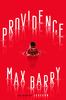
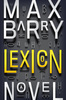

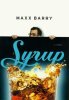
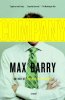


















Goodness
 This has been my last two weeks:
- I received a copy of the Jennifer Government screenplay.
- I sold the film rights to Company.
- I talked to John Cusack.
- The guy who is probably going to write the Company screenplay e-mailed me to talk about his ideas.
- I got a bunch of great new Company reviews, including a fantastic piece by Douglas Coupland in The New York Times Book Review.
- I did a bunch of interviews.
- The L.A. Times invited me to review a book for them.
- I wrote a proposal for a TV series for the Sci-Fi channel.
- Wil Anderson asked me to write a TV series for Australian TV with him.
- I worked up a final polish of the Syrup screenplay.
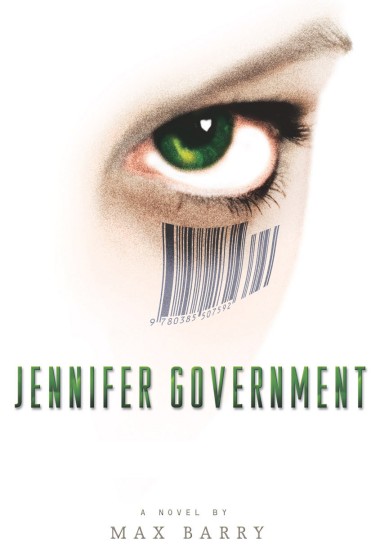
- The Chinese language version of Jennifer Government was released.
- I made some progress on getting NationStates 2 underway.
- I got invited to two festivals, one conference, two workplaces to give talks, and asked to contribute writing to four different places.
Ordinarily any one of these would be so cool that I would scamper to the keyboard and blog all about it. But there is just so much cool. To anybody but me, I suspect it is a sickening amount of cool. Plus I’m getting way more e-mails from readers than usual, including many hilarious or scary ones that are also clearly worth blogging about. Basically, there is so much cool stuff happening right now that I could blog about it non-stop, if only there wasn’t so much cool stuff happening right now.
I know what you’re thinking: “Oh, poor Max, I cry fat salty tears of compassion for you; how terrible to have all your time taken up by the realization of all your life’s dreams.” And you’re right; it is poor of me, because when someone, say, takes the trouble to compose a photograph involving my book, one of Stephen King’s, and a monkey, I shouldn’t allow that to pass without comment.
(The best time to write to an author, I have decided, is about two months before his book is published. That’s when most other people have forgotten his existence and he’s feeling frightened and desperate for love.)
Here is my weak compromise: an update in point form. This way I get to summarize what’s been happening without writing 10,000 words, and hopefully also without making too many people sick to their stomachs that so much good stuff can happen to one guy.
- It feels weird to read someone else’s adaptation of your book. Really weird. Louis Mellis and David Scinto have written a highly stylized version of Jennifer Government—the things they do with dialogue are just amazing—but it’s like seeing your kid dressed by a total stranger: she’s the same, but so different. It’s surreal on the same level as when I read reviews that call me “Barry,” as if I am an Important Person.
- Company will be developed for the screen by Tom Shadyac and Michael Bostick in conjunction with Universal. And boy are they fast movers! They’re already talking to Steve Pink about writing the screenplay. Steve was a writer on one of my favorite movies, Grosse Pointe Blank, as well the excellent adaptation High Fidelity. Not only that, but he was good enough to drop me an e-mail. What a guy.
- “Hi, it’s Johnny Cusack.” Only one of the coolest guys on the planet. On the phone. Talking to me. While my wife hyperventilates beside me. (I think Cusack even trumps Wil Wheaton, as far as Jen is concerned. Because he was in Stand By Me and Say Anything. I am a little concerned, though, that I only seem to be meeting celebrities that my wife has had huge crushes on.) John—I mean Johnny—I mean Mr. Cusack—was interested in the Company film rights, and although they ended up going elsewhere, maybe we’ll get lucky and still get his involvement somehow.
- If there is anything more professionally satisfying than having a absolute titan of the writing scene—a guy who is clearly my literary superior in every conceivable way—write a bunch of flattering things about my work in The New York Times Book Review… then it’s probably illegal.
And some standout e-mails from readers:
- Kyle, a student in Canada, decided to create a web site for Zephyr Holdings (the company in Company). You know, just because he could.
- Hobbie wrote to tell me that Russian Coke tastes a lot like Fukk is described in Syrup. My lawyers are just waiting for them to put it in a black can.
- Christian delayed responding to a fire alarm in his building so he could finish a good bit of Syrup. Nice.
- Jerry shot me a slightly scary list of websites devoted to barcodes, and the people who love them.
- Phill says I convinced him to convert to from Windows to Linux, which makes me feel all warm and subversive.
- Rachel e-mailed me an exhaustive explanation of why American shower faucets work that way and how to master them.
- Brandon explained that although he loves my web site he is never going to buy one of my books because he doesn’t want to “spoil the mystery.” I was going to ask him to elaborate on this theory, but then I decided this was one mystery I probably didn’t want solved either.
 30 comments
| MaxBarry.com ›
Max ›
Goodness
30 comments
| MaxBarry.com ›
Max ›
Goodness
Corporate Blasphemy
 In many religions, it’s forbidden to speak the name of God. Or at least,
the manner in which you can speak it is restricted: for example, Judaism forbids defacing
the written name of God, and most prohibit the use of God’s name in a
derogatory or insulting manner.
In many religions, it’s forbidden to speak the name of God. Or at least,
the manner in which you can speak it is restricted: for example, Judaism forbids defacing
the written name of God, and most prohibit the use of God’s name in a
derogatory or insulting manner.
I thought about this when I heard about H.R. 683: the Trademark Dilution Revision Act, which was passed by the U.S. House of Representatives last year and is now headed for the Senate. The most interesting part of this bill—to me, at least—is that it may make it illegal to use trademarked names in fiction. So I might henceforth be unable to publish a novel like Syrup (which is set partly within Coca-Cola) or Jennifer Government (which features Nike, McDonald’s, and others).
Many people seem to think that’s illegal already. When I was writing Syrup, I was often told it would never be published until I took out all the real company and product names. I remember one guy in particular telling me the “Golden Rule” of fiction writing: “Never use a Coke can as a murder weapon.” Because, apparently, Coke would descend on you with an army of lawyers. You could only get away with it, he said, if you used the product in a positive way—for example, your hero loves drinking Coke. But he doesn’t use it to kill anyone.
This sounded ridiculous even at the time. I wasn’t pretending that my novels exposed actual events that had taken place in Coke or Nike; I was just using them as a setting, in the same way I used Los Angeles and Melbourne. I could have invented fictional companies, just as I could have invented fictional cities, but then I’d also have had to work in descriptions and history to build up in your head the kind of company or city I wanted you to see. Coke, Nike, L.A., and Melbourne were all convenient shorthand.
And sure enough, I didn’t have any legal issues in the U.S. with either Syrup or Jennifer Government. In both cases the publisher wanted a legal disclaimer pointing out that they were works of fiction and not based on real events, but that was it. We were never contacted by any company and never sued.
(Things were different in the UK, where free speech laws are weaker. Syrup has never been published there, and the publisher got more and more worried about Jennifer Government the closer we got to publication. Eventually they got a whole bunch of lawyers together to come up with a legal strategy, and this was: wait six months and see if anyone sues the American publisher first. If you had gone to law school for six years, you too might be able to come up with brilliant tactics like this.)
Part of the reason Syrup and Jennifer Government were able to be published was trademark law. This allows one company to sue another if they think they’re using a confusingly similar name or logo; in essence, the goal is to prevent customers from being deceived by imitators. But that’s all: the law contains a specific clause—a clause that H.R. 683 will rewrite—denying companies the ability to block non-commercial uses of their name, such as when it’s incorporated into a novel.
The current situation is exactly as it should be. I don’t believe I should be allowed to deliberately make up lies about companies and pass them off as the truth, nor start selling my own brand of sneakers called “Nike.” But if I’m writing a novel about cola marketing, why should I have to pretend that Coke and Pepsi don’t exist? Companies have made themselves loud, intrusive parts of society; why should artistic depictions of the world have to scrub out any unsanctioned mention of them?
But this is exactly what companies want. They spend billions of dollars to get their names on our lips and their logos in our eyes, but letting us talk about them is dangerous: we might say something they don’t like. They want what Naomi Klein calls the “one-way conversation:” to be able to speak to us—endlessly so, through billboards and television and radio and product placement in your movies and the back of your bus ticket—without allowing us to speak back. Unless, that is, we’re saying positive things about them; unless we’re “on message.” And so they seek complete control over their names, to ban us from uttering them unless it is to speak praise.
Companies used to be pieces of parchment. Then they gained more rights and more protections until they had the legal status of a person; you can now be sued for defaming them. But that’s not enough—of course not; nothing will be enough so long as their inbuilt goal is to endlessly expand. So now they want to be more than a mere person. They want the kinds of rights that have previously been reserved for the superhuman. They want to be gods.
Note: There are some interesting articles on H.R. 683 at Public Knowledge, Ars Technica, and Public Citizen.
After the First Draft

 In
the
grand tradition
of posting news about myself that
chuckpalahniuk.net
reported first: I’ve written an essay. Webmaster Dennis Widmyer is putting
together a great resource for writers called… uh…
The Writer’s
Resource, and asked if I’d contribute something. So I wrote
this piece about rewriting.
If you’re a writer, you might find it interesting.
In
the
grand tradition
of posting news about myself that
chuckpalahniuk.net
reported first: I’ve written an essay. Webmaster Dennis Widmyer is putting
together a great resource for writers called… uh…
The Writer’s
Resource, and asked if I’d contribute something. So I wrote
this piece about rewriting.
If you’re a writer, you might find it interesting.
If you’re not, well… isn’t this picture of Fin cute?
Feel the Love
I was starting to get worried: it had been almost two weeks of near-constant
praise. That’s just not natural. Fortunately, this morning a breath
of fresh air blew into my Inbox: a letter from Mike.
Dear Max,
I have played NationStates for quite some time and, after listening to your interview on NPR this morning, my assumptions about you were proven startingly correct. I assumed that you were a pretentious snob who is an ego-aggrandizer because your book reviews are consistently negative yet you continue to produce such infantile drivel with such a delusionary sense of accomplishment and self-importance. What you fail to realize is that your “insights” are nothing more than a few whiney complaints of a mal-adjusted mal content who has failed to cut it in the real world. Your comments on NPR, which in my opinion coddles this approach to life, were nothing short of predictable.
I like how Mike’s assumptions were so accurate that even he is startled by just how on target he was. He must have even nailed my accent. His next sentence is a little less clear; I’m not sure how “consistently negative” reviews would lead to me being an egomaniac. That would work work the other way around, wouldn’t it? And I can’t back him on “failed to cut it in the real world;” I mean, I’m not living on government subsidies, here, Mike. But I am impressed that he listens to NPR even though he doesn’t like it. Put this together with his willingness to write to authors to tell them how bad they are, and you have a man who isn’t afraid to confront what he disagrees with and set it straight. I appreciate that kind of directness, and I’m sure Mike does, too.
Let me make a connection between this attitude in your book and this attitude in nationstates. You have created a game in which, much to the difficulty of many Americans (such as myself) to comprehend, the game operators such as yourself rule as their judges of themselves and of their own actions…
This goes on for a bit and after a while even I lost track of what he was talking about. But I gather it’s his main point, because he starts writing IN ALL CAPS and swearing. Most of my hate mail is from NationStates players, which is something I’ve never been able to work out: if anyone is entitled to yell at me, surely it’s the person who shelled out twenty bucks for a book she didn’t like, not the guy who has spent the last year playing my web game for free. But for some reason it doesn’t work like this.
Mike closes with:
I strongly suggest that you get it together, Max. Time for a change, perhaps?
Mike US of A
Mike! Thank you for your e-mail. It’s been so long since someone roundly abused me for nothing in particular that I was starting to get nostalgic. I appreciate your advice, although I am not sure what you are recommending. But in any case, it brightened my day, because now I feel as if a little balance has re-entered my life, and I didn’t have to be hit by a bus to get it. Take care, Max.
The Times on Company
 I am sick. But I have a conference call to L.A. about my Syrup
screenplay so I’m up and at my keyboard, with a glass of orange juice to
my left and a bowl to hawk up phlegm into on my right. (Sorry. That line
between what other people find interesting and what they really don’t want to
know? Sometimes I have trouble tracking that.)
I am sick. But I have a conference call to L.A. about my Syrup
screenplay so I’m up and at my keyboard, with a glass of orange juice to
my left and a bowl to hawk up phlegm into on my right. (Sorry. That line
between what other people find interesting and what they really don’t want to
know? Sometimes I have trouble tracking that.)
I open up my e-mail client and see, oddly, a lot of new mail. And most have “New York Times” in the subject line. Some also have “congratulations” or “rave.”
And I don’t open any of them. I just sit there, stunned, unable to believe what a ridiculously lucky streak I am on.
I finally give in and check Amazon.com. Company’s sales rank has jumped to 22. If I’m reading this right, at this moment it’s the fifth best-selling novel, behind Harry Potter, The Da Vinci Code, that damned Kite Runner, and—yes, of course—Stephen King’s Cell.
This is so amazing I have to run into the bedroom and wake up Jen.
We make too much noise and Fin wakes up, too. I hold her while we read the New York Times review. It’s by Janet Maslin and is jaw-droppingly good. And it actually says:
“Company” is Mr. Barry’s breakout book
If there is such a thing as balance in the Universe, tomorrow I am going to be hit by a bus, bankrupted, and disemboweled.
Travel Diary: Days 10-12 (New York, L.A., Melbourne)
I sleep in later than I mean to and have to shower, dress, and
pack so fast that I barely have enough time to steal a hotel pen.
I’m meeting my friend Charles for breakfast, and we decide to use
the hotel restaurant.
This turns out to be a mistake, as Charles manages to order the world’s most expensive
bagel, a whopping $18 because along with the juice and coffee it
qualifies as a “continental breakfast.”
Our plan is to walk to the Museum of Natural History, but it’s such an extraordinarily sunny day that instead we end up just chatting on a bench in Central Park. During this time I watch a lot of parents with prams go by, and enjoy peering at their babies until I see one with beady little eyes and a hairy face. It’s a miniature poodle. Yes. In a pram.