













The Block

I’d love to be a published author, but I never seem to finish any of my stories. I write about 20-60 pages and then just kinda let the story die, and it is not for lack of trying…I really would love to finish a story, but I feel my life gets in the way. Where do you get the energy, drive, and determination to write a full length novel?
I avoid handing out writing advice on this site, because it’s hard to do without sounding like the world’s biggest blowhard. But I get this question so often that I’m going to blow anyway. (Forgive me.)
Disclaimer: I don’t think there’s any advice that’s going to work for all writers. Everyone does this thing differently; you need to find what works for you. Don’t devoutly follow any rule about writing… except this one. And the one about always relocating a few copies of my book to the front displays any time you’re in a bookstore. Yeah. Just those two.
I guess the first thing to realize if you’re stuck a few chapters into a novel is that this happens a lot. It doesn’t mean you’re untalented or undisciplined or not cut out to be a writer. I started a novel in high school that I thought was brilliant in Chapter 1, okay by Chapter 4, and after that didn’t want to think about. It died a slow, lingering death on my hard drive, but because I knew it was there, waiting for me, I didn’t want to write at all. It was a couple more years before I resolved to leave it behind and start something new: that one clicked for me in a way the other never had, and I finished it.
So the important thing is not to let this one problem derail you from writing. Maybe you can fix this story and maybe you can’t; either way, you have to keep writing.
I think there are three reasons you can lose enthusiasm for a novel. Let’s start with the ugly one: it was a weak idea to begin with. Maybe your premise isn’t well-suited to a novel; maybe it’s better as a short story or screenplay. Maybe it needs another key idea or two to fill out the concept. Or maybe you just thought this was going to be better than it turned out. In any of these cases, it often won’t help to blindly forge ahead and hope everything gets better. So let the novel sit for a while. Start writing something else. It doesn’t matter what. You might end up coming back to this novel with new ideas and a ton of motivation, but if you don’t, let it be because you’ve moved on to something better.
The second possibility is that your story has good fundamentals but you took a wrong turn. This can happen any time, but is more unsettling at the start because you have less confidence. A trick I use when suddenly I go from powering along to a dead halt is to delete the last sentence. Even if I think there’s nothing wrong with it: backspace backspace backspace. For some reason, this almost always immediately presents me with an idea for a new way forward. Sometimes I have to delete a paragraph or two, or (very rarely) even a whole chapter. I don’t know why the physical act of cutting part of the story away helps—I should be smart enough to work this out by just thinking about it, shouldn’t I? But apparently I’m not, and it does.
(I don’t plan my novels out in advance. If you do, this technique is less likely to help you. I hate planning novels; I think they’re much more fun to write when they evolve on their own. I tried planning a novel once and it was dull, dull, dull. (No, it wasn’t one of my published ones. Shut up, you.))
The third possibility is you’re being too hard on yourself. For a lot of writers, getting critical too early—and “too early” here probably means “before you’ve finished the first draft”, or at least 30,000 words—is a quick and effective way to kill your motivation. I’m lucky on this score, because I am blessed with a kind of split author personality: I have the writer guy and the editor. The writer guy is totally deluded about his own ability: he thinks everything he writes is breathtakingly brilliant. Which is very handy, because when I think I’m working on God’s gift to the 21st Century, it’s easy to stay motivated. But unless I snap out of that at some point, all I have is a first draft, and that’s not nearly good enough. This is when my editor personality comes in. He thinks everything I write is the purest horse crap. He can’t believe that I would consider inflicting such a grotesque parody of literature on live human beings. So he makes me rewrite, and rewrite, and rewrite.
Getting those roles mixed up is a disaster. You don’t want a dose of cold, hard reality while you’re writing. No, no: delusion is your friend. Embrace the delusion. Save the critical analysis for later.
Okay. Enough blowing. Hope this helps someone.
 17 comments
Hand Me My Y-Chromosome
Apparently I write like a girl. Someone from the
Internet Writing
Workshop sent me a link to the
Gender Genie,
where you paste in a section of text and it uses an algorithm to detect
whether the author is male or female. Or, if you’re an author, you can
tell whether you’re really nailing your opposite-sex
characters. I mean, nailing their dialog. Portraying it accurately.
Okay. Better.
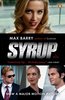
I was up for the challenge, so I pasted in a bunch of lines that belonged to 6, my main female character from Syrup. Bing! Female it was! So at this point I was feeling pretty clever. Then I tried a collection of Scat’s lines. Female. I tried that A Shade Less Perfect short story. Female. More short pieces: female, female, female.
But maybe that was just my fiction voice. Surely, I thought, my blogs would positively drip with manly essence. By which I mean machismo. But no: female, female—wait! Talking about basketball, the business of film options, and Mary-Kate Olsen’s stomach scored me my first “male”. My drive-by Todd Bunker blogging: also male. So too were finding interesting things to do while standing in the shower and comparing Linux to Microsoft Windows.
That was a relief. I’m at least partly in touch with my masculine side. I can live with that.
Ah, crap. I just tested this blog. Female.
Talk to me, baby
My
last blog
gave some people the idea that my life is all L.A. movie
premieres, shooting hoops with Adam Brody, and doing coke lines off
Mary-Kate Olsen’s bare stomach, but sadly it’s not. From
an author’s point of view, selling
film rights tends to be like this:
Agent: We’ve got a great offer from Legendary Director X!
Author: Oh, cool!
One Week Later.
Agent: Yeah, that didn’t come off.
Author: Oh, damn.
One Week Later.
Agent: We’ve got a great offer from Excellent Production
Company Y! Want to take it?
Author: Sure, okay!
Toni writes:
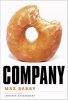
so did you sell all of the rights to Company over to Doubleday or do you get all of the rights? I’m curious about how this whole process works…..do you get a cut of the film profits?
While Nathan, more succinctly, says:
Paramount. Nice. You must be loaded now.
First I should point out that there is no Company movie deal yet; there’s just people talking. That may or may not lead to a deal, but even if it does, it’s unlikely I will be rolling around naked in hundred-dollar bills. Well, I might be, but there wouldn’t be that many of them. Movie rights deals are structured so that they have a front end and a back end. The front end is the money the film studio pays now, which buys them an exclusive period (usually a year or two) in which to develop the film. This is called an option, and the amount paid is relatively small. Exactly how relatively small depends on whether you are, say, Dan Brown, or, say, me.
The back end is the juicy part. This can include a percentage of profits, but mainly it’s just a great big wad of cash, about an order of magnitude larger than the front end, and payable when the film goes into production—that is, when the cameras start rolling. Many, many novels are optioned but never go into production, in which case the option lapses and the author is never paid the back end. (I haven’t seen one yet.) Some authors are more than happy with this, because they get to sell the film rights all over again. (Which has happened to me once.) But this is pretty anti-climactic. I want to snuggle into a soft red movie seat and chew popcorn while a story I once dreamed up is projected in 35mm. Then I’ll shoot some hoops with Adam Brody and go see Mary-Kate about that coke.
Blog this
I’m happily browsing the web, minding my own business, when I stumble
across it: an article called
“Writers Who Blog,”
that totally trashes me out. I know! I was shocked too. Still, I was
prepared to file it away with all the other things that make
no sense, like fat-free chewing gum and Florida, until I discovered
something: the article was by the same guy who once wrote
one of the worst reviews
of Jennifer Government I’ve ever seen.
I believe there’s an old saying: diss me once, shame on you. Diss me twice, I totally go you on my web site. So I’m pulling off my writing gloves (a simple design to the eye, but they have hidden layers) and knuckling up.
First, the review. Now, I understand that people need to review books. It’s a valid profession, even noble in its own way, and performs an economically valuable function, like prostitution, and selling heroin to teenagers. Maybe book criticism is even more valuable than those. But there are certain Things Critics Do That Piss Me Off, and Todd Bunker does three out of five. Plus one I keep meaning to add to that list: he gives away some of the ending. In fact, he blabs about something that happens on page 325—which, given it’s a 335-page book, should surely be punishable by public flogging. I’m sure most authors would agree with me.
That review was written under a cowardly pseudonym—the only reason I know “Johnny Yuma” is “Todd Bunker” is this new article, in which he fesses up even while dumping more buckets of cold, smelly editorial down my back. It goes like this: Todd, who is a novelist, is thinking about adding a blog to his own site. Curious as to whether this would be a good or bad thing for his career, he checks out Neal Pollack, Wil Wheaton, and me. Neal and Wil come out of it with minor wounds, but me: whoo. First he blasts me for being on the receiving end of some kind of publishing promotion. Then he says the only reason I sell books is because I created NationStates. He disses my “Ride the Walrus” blog, saying it proves I have nothing to write about, then he suggests I lie about how many people visit my site. He calls my readers sycophants (!!) and finishes up by rating my blogs as 2/10, because they’re: “Beside the point. [Max] blogs for hits.”
Being interested in site traffic is a pretty brave accusation to make in an article that contains three hyperlinks to Todd’s own site, an Amazon link to his novel, and an image that when you hover over it pops up: “Todd Bunker Todd Bunker Todd Bunker Todd Bunker Todd Bunker Todd Bunker”. And that crack about “Ride the Walrus” is totally undeserved. I tell you, it’s the sensation that’s sweeping the nation. It’s clear to me Todd hasn’t tried it at all.
After finding so many faults with other people’s blogs, Todd decides against creating one of his own. The “constant interaction” would be “too much of a good thing,” he says. Instead, he prefers to retain “a bit of mystique”.
Well, I don’t know, Todd. If “mystique” means concealing that you’re a tosser, it might already be too late. I say, have the courage to put up a blog. Look, it is tough to get noticed as a new novelist; there are way too many of us. I tried the quietly-wait-for-the-world-to-notice-your-great-novel thing, too, and it didn’t work out: I had a good book, good publishing support, and great reviews, and it just sunk. If you want to write books and tuck them into your desk drawer, then great. But if you want to make a living out of writing stories, you have to do something more than sit back and wait for success to land in your lap. You have to do everything you can.
So don’t be scared, Todd. Show us what you’ve got.
Max: the long version
I did an interview with
Australian
Speculative Fiction recently;
they’re putting together a book on Australian sci-fi writers and
apparently I qualified. They e-mailed me a list of questions and,
as per my usual policy, I decided, “Must respond to that soon,”
then let it sit in my inbox for about a month. (I blame my mail program.
Thunderbird
lets you press “1” to mark a mail message
in red as “Important” to make sure you don’t lose those
e-mails you really need to follow up. But this gives me a totally false
sense of accomplishment and closure, as if I have dealt with them
and can move on. I now have a solid red inbox.)
Fortunately they kept hassling me about it, so I eventually got around to pounding out my answers. I mailed them off, they thanked me, then a week later sent me a copy of their article for the book. Of my response, they’d used four sentences.
Four sentences!
I can’t let all those other sentences go neglected. So here’s the full text, for anyone who’s interested.
1. Why do you write (insert genre)?
That’s like asking why you pick your nose: you just do. I mean, not YOU, necessarily. I’m sure you’re very hygienic. But writing is a compulsive thing: I do it because I do it. First I get an idea and it bounces around my head for a while. If it sticks around… well, I can’t just leave it there. That would be cruel. If I’m intrigued enough to want to know what happens next in this story myself, I sit down at a keyboard and find out.
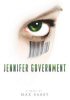
I’ve never chosen a particular genre and thought, “Okay, let’s come up with a story in that.” In fact, I don’t think about genre at all. That’s the kind of thing I don’t worry about until I’m trying to sell it. When I was searching for a literary agent for Jennifer Government, one wrote back, “Sorry, we don’t represent science-fiction.” And I thought, “Science-fiction? Is that what this is?”
2. What are your motivations in writing (insert genre)?
Not very sophisticated, unfortunately. I just enjoy it. Sometimes people say I must be very disciplined to write full-time, as if I have to force myself to work on a story. But that’s not it at all; I write because it’s great fun.
I have had times when I haven’t enjoyed my writing, and I’ve forced myself to knuckle down and wade through it. This made me feel very noble and hard-working, but the fiction I ended up with was the most unmitigated crap. It turns out that, for me at least, when writing is fun and easy I’m producing good writing, and when it’s a struggle I’m wasting my time.
3. What is unique about your work?
I notice all these questions inflame the ego. I’m not sure that’s a good idea, when you’re dealing with writers. We don’t need much encouragement in that regard.
Actually, I think it’s hugely helpful to be able to convince yourself that what you’re working on is the greatest piece of literature to ever grace a page—because a novel takes a really long time to write, and if you lose faith in it, well, you might as well go watch The O.C.
“Unique” is a big word; you can argue that very little in literature is unique. But I hope my books are distinguishable by their amusing take on life, particularly all things corporate, and their focus on telling a good story with a minimum of messing around. Oh, and their complete lack of physical description. But I’m working on that.
4. Do you write in other genres or mainstream?
All of my novels are corporate satire, but the first is mixed with romantic comedy and the second with science-fiction. Of course, what kind of a genre is corporate satire? I may have gone needlessly specific there. But if that’s not my genre, I’m not sure what is, so I’ll stick with it.
I can see myself writing about things other than corporations, but I don’t think I’ll ever lose my love of humor and satire.
5. When did you first begin to write?
Apparently I dictated a book about frogs when I was two. Does that count? It was non-fiction, and somewhat terse in style, but it was published, in the sense that my Mum stapled all the pages together. Some time after that I veered off the path of journalism into fiction. I remember writing horror short stories in high school that featured my classmates — they were very popular, except among people who were in them — but I don’t remember ever actually starting writing. I’ve just always done it.
6. Do you do much research for your novels?
I do as little as possible. I will research before I’ve started work on a novel — because this is basically just reading about subjects I’m interested in. But once I’ve come up with the book’s basic premise, I don’t run out and bone up on all the relevant topics. Doing research at this point feels to restrictive: I end up trying to fit the story into the confines of reality, when I should be bending reality to fit my story. So once I’ve started writing, I avoid doing any research, even if it means leaving big, obvious gaps in the book that need to be filled in later.
7. If you could write and be published in another genre what would that be?
I’m not especially established as a science-fiction writer, but I’m interested in doing more of it. I want to write a sci-fi movie, because there is a shameful dearth of good ones.
8. What did it feel like when you had your first book published?
The first time I saw my book on the shelf of a bookstore, it looked as if someone had sneaked a copy in there. The other books all looked legitimate, but mine felt like an impostor.
It was a truly magical time, because I also thought that my run up the New York Times bestseller list was surely only a matter of time. Then reality had to go and spoil it.
9. What are your goals for writing in future? Eg break into the US market.
More than anything else, I want to tell good stories. Hmm, wait, that sounds as if so far I’ve been telling bad stories. I mean that my main motivation is to create stories I’m proud of. I hate working on a novel that doesn’t feel right, and I would hate the idea of having a novel published I didn’t love.
Sales-wise, I don’t want any novel to sell fewer copies than the one before it—but this is not something I can do much about, other than write good stories. So I’ll stick to that.
10. In your opinion, are there any uniquely Australian elements in your writing either in your characters or setting?
Only one of my books is set in Australia, even partially, and it’s a very Americanized Australia. So I don’t write what you would typically consider to be Australian literature: no Aussie slang, Outback settings, or lovable rascals. But I do think my sense of humour is very Australian. I’ve heard from a few readers that they recognized that style in my books, even before they knew I was an Aussie. Also, I think my appreciation for satire is an Australian characteristic.
11. Do you have any advice for aspiring writers?
Yes, but none of it is startlingly original. Aspiring writers should write: that’s by far the most important thing. A person with no contacts and no knowledge of the publishing industry but who writes a little every day and loves what he’s doing is eventually going to get published: I really think it’s that simple. Some people will hit it big with their first novel, but most of us need time to learn what we’re doing. I have two published novels and a third coming out soon: these are, together, the second, fifth, and seventh novels I’ve written. This is success in publishing: getting three out of seven books onto the shelf.
12. Why do you think there are so many Australians writing in this genre now?
I ended up going outside Australia to find a publisher, so I’ve never really connected with the local scene. As a result, I don’t know much about it. Hmm. Maybe I should read this book.