




































Idea Me
 I’m almost finished the final round of major rewrites on the new
book. That’s what I’ve been doing, if you’re wondering. It has been
more fun and less like pulling my brain out through my nostrils than
usual, so that’s good. I am feeling productive.
I’m almost finished the final round of major rewrites on the new
book. That’s what I’ve been doing, if you’re wondering. It has been
more fun and less like pulling my brain out through my nostrils than
usual, so that’s good. I am feeling productive.
In a few weeks, I’ll be ready to start my next book! That’s exciting. Except I have no ideas. None. I don’t even know which genre it’ll be. By now it seems like I should have some sense of my own place in the literary marketplace, but I don’t. Apparently I do a kind of comedy-sci-fi-thriller-satire-romance thing. But I don’t know where you shelve that.
I mention this because it occurred to me that I have this web site, and you read it, so I should data-mine you for ideas. There is possibly a less exploitative way for me to say that. But I mean, if you’re on this site, I bet we have all kinds of things in common. Like favorite authors. And being interested in what kind of book I’m writing next. You’re basically me, with more perspective.
I don’t want story ideas, because those are personal. You could have the best story idea in the world and I wouldn’t like it because it wasn’t my idea. I’m very small like that. Also, imagine the legal ramifications. Nightmare. But I would like to know the very broad reasons you might pick up a book with my name on it. Is it for yucks, is it for a page-turner, is it to snip out the author photo for identity theft? You know. Broad strokes. Then the next time I think, “Hey, how awesome would it be to write a comedy about a sentient toaster,” I might remember your comments and think, “Mmmm, not that awesome.” This would be more efficient than my usual process, which is going ahead and writing the book and nine months later having my agent explain why it’s unpublishable.
In other news, I have been playing a computer game, Diablo III. This is one of the few games I’ve put significant time into since my first child was born seven years ago, just as an FYI for anyone thinking of having kids. The game is pretty fun, but what’s fascinating to me is how much video games have changed. When I was a kid, they were coin-munching sadists designed to ruthlessly punish anything less than autism-grade concentration. But now they are colorful piñatas for the easily bored who will rage on Twitter if anything is too hard. If I finish this rewrite and don’t have an idea for my next book, I’ll post a review.
 64 comments
Irony Certification Agency
SAN DIEGO, CALIFORNIA: Mr. Jeremy Frost, proprietor of the area’s newly-formed Irony Certification Agency, wears blue overalls. “People expect someone in a nice suit,” he says. “But I want them to see that irony is just a facilities problem. Like a leaky pipe.”
Mr. Frost’s business has been operating for eight months. In that time, he claims to have rendered services to some of the state’s largest employers, including a tech giant and two major insurers. But he’s unable to name names.
“People don’t like to admit they had an irony guy in,” he says. “They see the results. But they don’t like to talk about it.”
That’s something Mr. Frost aims to change. “Getting that first meeting, convincing them I can help them, it’s tough,” he admits. “But once I’m in, I’ve never left a customer disappointed. I figure if I keep doing what I’m doing, people will eventually get comfortable enough to share their irony problems.”
“Irony problems,” according to Mr. Frost, occur when places or objects build up irony over time, and then trigger ironic situations. He explains: “Say there’s a grocery store and they give me a call. I might find a guy to take in—Mike Slipper, for example, or Amanda Fall. I’ll have them walk up and down the aisles. Now, if Mike Slipper slips, or Amanda falls, that’s a pretty good sign we’ve got a source of irony somewhere nearby.”
It’s not always that simple. “I ask myself: what’s the most ironic thing that could happen? Because even a little irony nearby can be enough to set something off, if it’s potentially very ironic. One time an insurer had me visit this guy—he was a little accident-prone, and on a big, big policy. At first, everything checks out, but I’m just not comfortable with his car. It’s more likely to lock with the keys inside when you’re running late, the battery went flat when I tried to drive it to the store to buy batteries… nothing outside normal tolerances, but still, on the high side. Well, then I find out the guy has been writing letters to the paper saying we don’t need seat-belt laws. I can’t tell you the details of how that turned out, but let me just say that insurer saved a ton of money.”
Once Mr. Frost identifies a source of irony, what does he do? “Well, bear in mind, I do Irony Certification, not Irony Disposal. If you’ve got a restaurant on Ebola Avenue, I can check the premises over and tell you whether you’ve got a problem, but I can’t relocate your business.”
This is particularly the case when the source of irony turns out to be a person. “It is awkward, yeah,” he admits. “You have someone who’s been a long-time model employee, she owns a dog named Buster, and suddenly you’re telling her she can’t work in the accounting department any more. It’s not her fault. We still don’t know how the build-up of irony happens. We just know it’s there.”
Mr. Frost is straightforward about the skepticism he receives on the job. “Everyone has an opinion about irony,” he says, a touch wearily. “I do get people coming up to me, saying this isn’t really ironic, or that other thing is. Sometimes, a guy comes up, and three words in, I can tell from his accent where we’re going.” He shrugs. “But it doesn’t bother me. When you’re an Irony Certification Officer working on an irony-laden site, people telling you you’ve got the definition of irony wrong is just part of the job.”
Why It Takes So Long
Why does it take a year for a book to go from a draft
to bookstore shelves? Is it to build anticipation?
Because publishers are modern-day Neanderthals, trying to
make e-books by rubbing sticks together? Because authors
are so precious?
The correct answer is: yes! In more detail, it’s because this*:
MONTH 1
The editor and the author kick things off by exchanging emails about how happy they are to be working with one another. The editor prepares an EDIT LETTER, which is a document describing how fantastic the book is, and how even more fantasticer it would be if the following thirty or so issues were addressed. I put EDIT LETTER in caps because it’s very important. The author considers this. There is some back and forth over any parts of the EDIT LETTER that the author requires more clarification on to fully understand what kind of universe the editor must be living in to say such a thing.
MONTHS 2-4
The author rewrites. How long this takes depends on how much rewriting is required, and how depressed the author gets. All books have been through at least a couple author-driven drafts before they’re picked up by a publisher, but obviously another pass is needed, because why else editors. An editor who says, “Fine as is!” might as well go panhandle.
Also, books at this stage really do need rewriting.
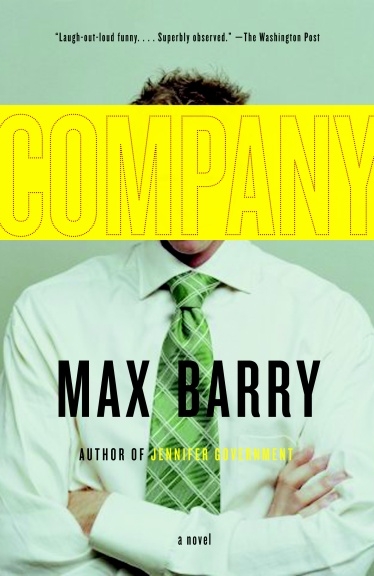
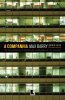
In my case, I did a lot of rewriting for my editor on Company, and the publication process took 22 months. I didn’t do much on Syrup, and it took nine. So there is possibly a causal link there.
The art department begins fooling around with cover ideas, under strict instructions to not share them with anybody, especially authors.
MONTHS 5-6
The editor approves the rewritten draft and shares it internally with salespeople, the art department, and unrelated editors’ assistants. I’m not sure why assistants; I just know every editorial assistant I’ve ever met has read all my books.
The editor and author begin seeking people to provide a blurb/cover quote. The first edition can’t have actual reviews on the cover, because those will be received too late. But you need someone to say “MAGNIFICENT… STUNNING,” so you have to hit up a fellow author.
The copyeditor prints out the new draft and scrawls arcane markings on it by the light of tallow candles using quills. This ensures the book can no longer be shared electronically, and all subsequent changes must be done by hand. This five-hundred-page monstrosity is photocopied and e-mailed to the author. Sorry, that was a typo. I mean mailed. You know. Mailed. When they physically transport something. The author reads this by light of a virgin moon, which is the only time the unicorn ink becomes visible, and accepts some changes while giving others a jolly good stet. This can be a difficult time for the author, who must defend grammatical errors as stylistic choices in order to not look stupid.
The editor emails the author a scan of the finished cover art, saying, “Everyone here loves this!” The author may object to aspects of it, if he is an ungrateful asshole who thinks he knows how to publish books better than a, you know, publisher.
The book’s layouts are developed: the internal artwork, including the fonts, spacing, and style of chapter headings.
Publicity plans are developed, and final-ish decisions made on things like price and publication dates.
MONTHS 7-8
The manuscript is transformed into a galley, which is the final, copyedited version embedded in the layouts. When I say “transformed,” I mean someone sits down with the five-hundred-page copyedited manuscript, which by now has been scrawled on by at least two and probably four different people, with additional pages inserted here and there, and some of the changes stetted and then destetted and maybe redesteted again, some of which are impossible to read because I had to use a green pencil to signify which changes were mine and I couldn’t find a sharpener and I was trying to squeeze between the printed lines and thought I had enough room but didn’t. This person types all that out. I have never met them, because, I assume, they are kept in a basement and fed raw fish.
The author is sent galleys of forthcoming books by authors who agreed to consider giving a blurb, in case he wishes to reciprocate, while maintaining artistic integrity.
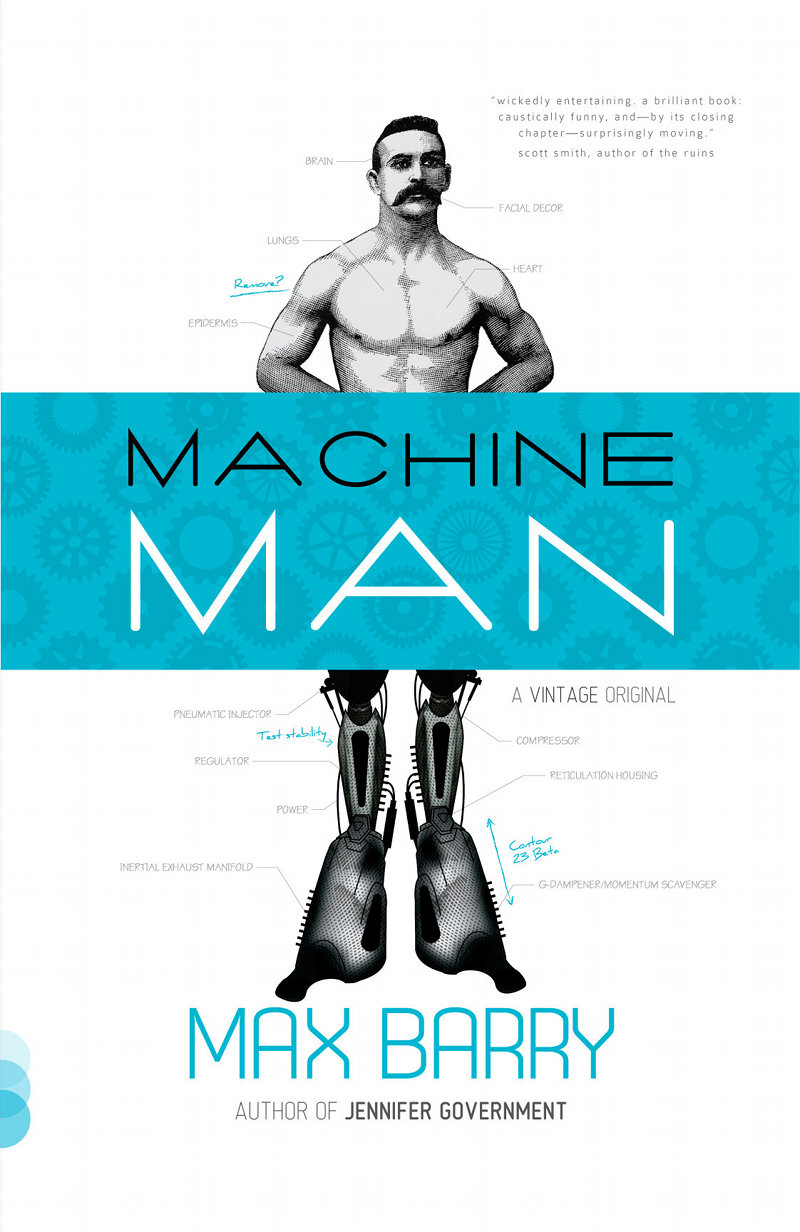
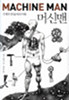
The Advanced Reader Copies are produced, which are like galleys, but one step closer to the finished version. They’re for reviewers and various promotions (a lot of Machine Man ARCs were given out at Comic Con last year), and are essentially the finished book, minus any late editorial changes, printed on cheap paper, and possibly with different cover art.
The author reads the latest galley/ARC and notices several horrendous errors that somehow escaped previous notice. He writes in with corrections.
The audio version is developed.
The author corresponds with translators attached to various foreign publishers, who want explanations for odd word choices. These will probably be published many months or even years later, and look super exotic.
MONTHS 9-10
The publisher pitches its quarterly list to large bookstore chains and buyers. I believe they actually sit down in a room, and the editor or marketing manager or whoever says, “Now THIS is a title we’re very excited about, it’s OH GOD PLEASE BUY ME by Max Barry,” and they have a little discussion about the author’s sales record and whether people are really interested in that kind of book any more, so that the bookstore chain/buyer can decide how many copies to stock. If they choose a low number, the book is essentially dead, because no-one will see it, and the publisher will scale back its marketing plans, because why spend money promoting a book no-one knows about. But if it’s a high number, there will be renewed excitement and high-fives and a little extra marketing budget for things like co-op (payment to bookstores for favorable shelf placement). The author can tell which it is because if it is a low number, the publisher won’t tell him.
Thanks to the amazing new website Random House has for its authors, I know they call this process “working with the accounts on an ongoing basis to estimate initial purchase quantities.”
The ARCs go out to newspapers, blogs, magazines, and anyone else who wants a copy and has an audience of more than three people. Interview and feature requests begin to come in and are scheduled by the publicity department. Early reviews come in and are forwarded to the author, unless they’re bad.
An e-book version is developed via a process involving priests and goats’ blood. Not really. It’s really done by re-typing the entire book from the finished, typeset manuscript. Nah, I’m still kidding. They take the last electronic document and just try to reimplement all the manual changes made since then by hand. You can decide which of those it is.
Due to piracy concerns, the e-book is closely guarded, so often cannot be reviewed by the author. Instead it is distributed to anyone with a blog and a netgalley.com account.
MONTHS 11-13
More reviews come in, and early interviews/profiles are conducted. The author, who has spent the last two years alone with a keyboard, begins spending large parts of each day talking or writing about himself, sowing the seeds for future personality disorders.
The publisher does whatever it is that needs to be done to ensure that tens of thousands of physical copies end up in the right place at the right time. I assume that’s something.
The book is published! The author catches the bus to the nearest bookstore to discover they’re not stocking it. Calls to agent ensue. The author may go on tour, which could involve dozens of cities over many weeks, or just popping into local bookstore and plaintively offering to sign copies, if they have some, like out the back or whatever.
During a book reading, the author notices a horrendous error that somehow escaped the editorial process.
The author wakes three-hourly to check his Amazon.com sales ranking.
And that’s about it.