































































Madison in Paperback
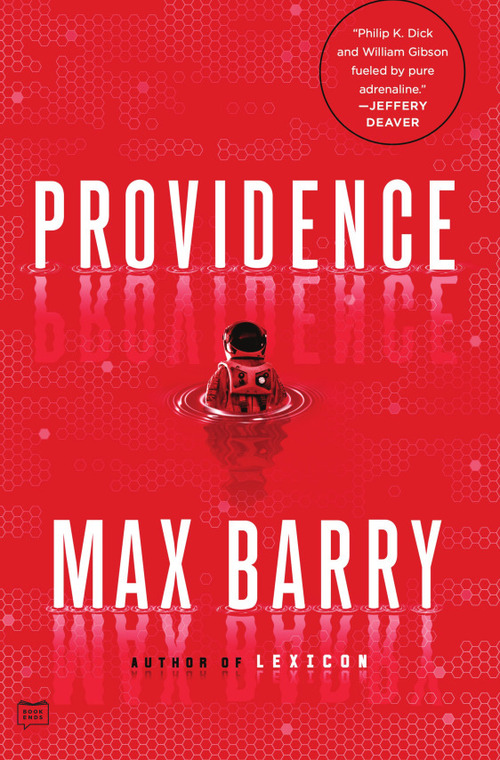
 I went to Canberra the other week to win an Aurealis Award for Best Sci-Fi Novel. It didn’t work. They read out some other book’s name instead. Still, don’t let that dissuade you from
picking it up, as today it comes out in convenient, affordable paperback:
I went to Canberra the other week to win an Aurealis Award for Best Sci-Fi Novel. It didn’t work. They read out some other book’s name instead. Still, don’t let that dissuade you from
picking it up, as today it comes out in convenient, affordable paperback:

By the way, I can’t believe how much multiverse talk there is. I actually put a line in the book about how people are sick of multiverse theory. Now every time I turn around, there’s a new multiverse book or show. Is that good? I don’t know. It’s probably good, because I became convinced that we do actually live in a multiverse, so people should accept it. Also I no longer believe in free will, but that’s a whole other thing.
Unrelatedly, did you see that thing about the Google engineer who got fired for telling people his AI had become sentient? The AI is totally not sentient, of course, but humans are so terrible at perception, we’ll believe anything has feelings if you draw eyes on it. Just imagine what kind of things people are going to do in the future because they’re fooled by increasingly lifelike AI. Wild stuff, man.
 7 comments
The Earlickers of Twitch
 You can find people doing anything on the internet if you want, but you probably
don’t. We all find our boundaries, I think, beyond which we’re fine with not
knowing the details. But we know it’s out there—there’s nothing
we’d be surprised to hear you can find on the internet, because of
course you can.
You can find people doing anything on the internet if you want, but you probably
don’t. We all find our boundaries, I think, beyond which we’re fine with not
knowing the details. But we know it’s out there—there’s nothing
we’d be surprised to hear you can find on the internet, because of
course you can.
Still, I’d like to present an online service in which Amazon.com pays women to lick plastic ears.

An earlicker at work.
Some earlickers gentle and sweet, as if the plastic ears might be ticklish. Others you’d think are trying to extract the last bit of jam from a deep jar. Each earlicker has her own style. Most break up the earlicking with light conversation, but a few advertise NO TALK, if you prefer your earlickers just to focus on the ears, please.
It’s important to note that Amazon.com doesn’t want earlickers. Amazon did not, I’m pretty sure, set out to create an earlicking market, and it would probably like them to go away. Nor do the earlickers themselves particularly want to be earlicking—these aren’t earlickers from way back, who finally found a commercial platform to do what they love. Oh no. This is one of those situations that came about despite everyone’s best intentions.
At its core—right down in the canal, if you like—this is a language problem. The earlickers exist because it’s hard to say what you mean.
 Amazon.com owns Twitch, which you might have heard of: It’s a streaming platform for
watching other people play video games rather than playing them yourself…
although that’s an old-school way of describing it, laced
with the same condescension with which my parents viewed us 80s & 90s
kids who’d do anything if it was on a screen.
Amazon.com owns Twitch, which you might have heard of: It’s a streaming platform for
watching other people play video games rather than playing them yourself…
although that’s an old-school way of describing it, laced
with the same condescension with which my parents viewed us 80s & 90s
kids who’d do anything if it was on a screen.
Amazon wants Twitch to keep doing what it’s doing: attract a mainstream audience where mainstream companies can advertise their mainstream products. But since anyone can become a Twitch streamer with a phone and some spare time, the site needs content rules. There’s no end of streamers to choose from, you see, and the audience skews young and male. It’s a viewers’ market, and the viewers quite like boobs.
So Twitch bans sexually suggestive content. See? It says it right here. No sexually suggestive content.
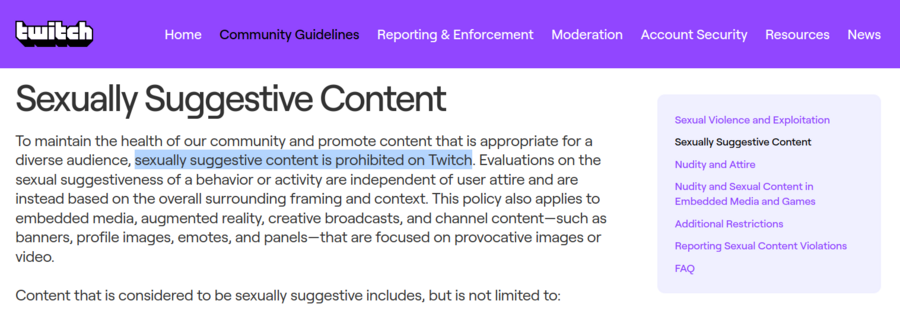
But that’s a bit vague, if you’re a streamer. If your income depends on staying on the right side of the rules, you want to know exactly where the lines are—whether you risk being deplatformed for doing a dance, for example, or going for a swim. Or licking plastic ears.
And Twitch—wanting to be transparent and helpful and not get pitchforked by a social media mob every time a popular streamer is or is not banned for crossing or not crossing the line—has obliged by writing policy docs to cover as many specific situations as possible. “Gestures directed towards breasts” are prohibited, for example, while “cleavage is unrestricted as long as coverage requirements are met.” (This is why streams are hosted by women with grand decolletage who don’t talk about it.)
You want details? Twitch has details. Twitch has precise rules for every scenario you can think of:
For streams dedicated to body art, full chest coverage is not required, but those who present as women must completely cover their nipples & areola with a layer of non-transparent clothing or a paint & latex combination (artist-grade pasties, tape, latex or similar alternatives are acceptable).
Or rather, almost every scenario. Because you can’t think of everything. Even if you cover everything that’s happening now, you can’t anticipate what people will come up with next.
The plastic ears with which the earlickers ply their trade are special microphones. They’re not cheap. You need to make a capital invesment to become an earlicker—which implies the existence of earlickers who sunk their savings into a 3Dio Free Space but never managed to made a living from it, and now the ears sit in a corner of their room, the lobes gathering dust, a symbol of regret.
But these microphones are the best (I assume) at capturing wet, intimate earlicking sounds, which, in the viewer’s headphones, create the auditory illusion that they are having their own ears licked. This experience can range from erotic to irritating, but it’s clearly, clearly sexually suggestive.
However, earlicking is not specifically mentioned in Twitch’s ruleset. And there’s a thin, artist-grade pasties veneer of credibility because earlicking is similar to ASMR, i.e. meditation via crinkly sounds. It’s difficult to find the words to express objectively how one is different from the other.
As someone who runs their own site of user-generated content, I’ve hit this paradox myself, where the more specific I make the site rules, the weirder behavior it seems to encourage. While the ruleset relies on broad, sweeping language—we may not be able to define it, but we know it when we see it—it’s relatively easy for site moderators to maintain consistent, common-sense standards. But the more specific and objective the wording becomes—which users want; they crave detail—the more bizarre corner cases pop up, which aren’t quite covered by the language, and which explode in popularity because now they’re the most boundary-pushing-yet-allowable examples of the type.
That’s how you get earlickers.
You can find the earlickers of Twitch here. (Warning: sexually suggestive.)
These Lads Don’t Try to Walk It In
 I get a Google Alert whenever my name pops up in articles,
which I use to find reviews of my books, and (if they’re good) link them from my website,
or (if they’re bad) update my list of people to turn my back on should we find
ourselves some kind of post-apocalyptic scenario and they’re all like, “But we
need water.”
I get a Google Alert whenever my name pops up in articles,
which I use to find reviews of my books, and (if they’re good) link them from my website,
or (if they’re bad) update my list of people to turn my back on should we find
ourselves some kind of post-apocalyptic scenario and they’re all like, “But we
need water.”
That works great so long as there aren’t other Max Barrys out there being notable. The last thing I want is to hear about some other Max being newsworthy. Even if the other Max is being a giant dick, sure, I can feel like, “Well, I’m doing better than that,” but I don’t want people wondering if I’m, for example, that duct-taped breast-touching Max Berry.
A few months ago I started getting alerts about a soccer-playing Max Barry. At first, I ignored them, because I don’t care about soccer. I once went to a game in England and the Prime Minister was there and a team kicked three goals and everyone passed out with excitement. That was fun. But I have no desire to see another game. One was enough. For me, soccer is no netball.
But these Max Barry alerts kept coming. Every few days, a new email. Max scored a goal. He scored two goals. His team was setting records. I got interested despite myself. If you spam me with parts of a story, it turns out, I need to see how it ends. So finally I looked him up. He plays for Buckie Thistle Football Club in Scotland. “Scotland” is probably redundant in that sentence. But, get this, Buckie Thistle is on a massive tear. They’re about to play Rothes for their 20th win in a row. Twenty wins in a row! Who are Rothes? I have no idea! But that’s exciting!
Buckie could win this whole thing, whatever it is. I’m not sure if there are finals, but if there are, I want to tune in, if they broadcast games from the Highland Football League. Possibly not, because the Highland Football League is, I read, level five on the Scottish pyramid of league rankings. The best league, the Scottish Professional Football League, is level zero. That’s really on the nose, in my opinion. They measure every other league by how many rungs it is below the best one. But anyway, I’m invested. I care about this now. Go Buckies. Buckies? Thistles? You go.
Snow White
 Once upon a time there was a queen, and the queen said, “Hey Google,
who’s the fairest one of all?” And her Nest Audio said, “Sorry, I didn’t
understand.” So the queen tried again; she said: “Hey Google,
who is the most attractive person in my geographic area?”
and Google said, “Sorry, I don’t have any information about that.”
Once upon a time there was a queen, and the queen said, “Hey Google,
who’s the fairest one of all?” And her Nest Audio said, “Sorry, I didn’t
understand.” So the queen tried again; she said: “Hey Google,
who is the most attractive person in my geographic area?”
and Google said, “Sorry, I don’t have any information about that.”
So the queen tried her phone; she said, “Hey Siri, top 10 most beautiful people in my kingdom,” but Siri didn’t answer, and the queen remembered she’d become annoyed and disabled Siri the night before.
The queen walked into her sitting room, where she had an Amazon Dot. “Alexa,” she said, “who’s the most beautiful person in the kingdom?” And Alexa said, “Sorry, I’m having trouble understanding right now,” which was a problem that had been going on awhile, and the queen had googled it and tried moving the Dot away from the wall and blowing out dust but nothing had helped.
The queen sighed and returned to her bedroom and opened Instagram on her phone. The queen had over two hundred million followers so her notifications were a nightmare, but she scrolled through search. Among the snaps of donkeys and farm workers was a reel of a young woman sweeping the front porch of a cottage in the forest. Maybe it was just the light, or filters, but she looked possibly even more beautiful than the queen.
The queen’s finger hovered over the clip. Normally, she would have looked up the account name, hired a hunter, and had the girl killed. But today she hesitated. She looked at the gorgeous outfits that had been laid out on the bed for the day’s photo shoot. “Why do I do this to myself?” she said. “It’s probably just filters.” Then she cast the phone onto the bed.
That day, the queen enjoyed the shoot for herself, living in the moment, unplugged, and felt happy and satisfied, and also like she was growing as a person. But when she posted her new set, among all the likes was the comment: “so beautiful xxx also love @snowwhite you 2 should pose together sometime.” The queen tapped through to see who @snowwhite was and fuck her if it wasn’t the sweeping girl from that morning.
“Hey Google,” said the queen, “Call Hunter.”
Messaging
You know, I think we’ve gone too far on this messaging thing. Not messaging as in sending each other messages. That’s fine. The more messages, the better. Messaging as in, How do I make an idea palatable to idiots.
Obviously messaging works. If you have an idea you need to get into people’s heads, you should think about messaging. People are busy. They pay no attention. When people hear an idea, they take one piece of it way out of context and form an opinion based on that, then refuse to change it until the end of time. You have more success if you tailor your message to be charming and digestible.
That’s fine. But I feel like we’ve begun to demand good messaging for everything, even when we’re not idiots. Now we think: If your messaging isn’t great, I’m out already. I’m not even going to entertain your idea, because your messaging sucks. It might be a good idea, but you couldn’t even get your messaging right, so forget it.
Maybe it’s a natural reaction to being bombarded by marketing all the time. Every day, sounds and and colors and movements try to catch our attention, most of which we manage to fend off. It’s wearying, so maybe it’s a relief to encounter some messy, confusing messaging that allows you to dismiss it right away, with no further brain-power required.
But this means abdicating responsibility to the messengers. It allows messaging, rather than the thing being messaged, to determine what we think about it. I don’t love the situation where we’re all so busy and distracted that there could be a, oh, I don’t know, a global pandemic and a free vaccine, and a valid argument against taking it would be, But the messaging was terrible.
More About My Robot Vacuum Cleaner
Everything has voices, now, but you can’t listen to them before you buy. All the online
stores, they list this spec and that spec, they have video of the thing whirring around,
circumnavigating the dog, but they don’t show you its voice.
I want to know what a talking robot sounds like before I let it into my house. Because some are better than others. Google, I can listen to all day. I’m happy with Google hanging around, chiming in about things. Google is a real positive spirit. Siri, to me, sounds slightly disappointed, like she wants to know why I couldn’t have looked this up myself.
I bought a set of Sony bluetooth headphones, and whenever I turn them on, a breathless teenager squeals “Power! On!” in my ears. I just want to listen to music. She chirps “Pairing!” like we just got married. It might be some Japanese cultural thing. When I turn them off, she says, “Bye-bye senpai… for now!” and sounds a little sad, so that I actually got reluctant to turn her off, and started just putting her down on the desk. Then I came back and she was on 2% battery, and said, “I don’t feel good,” and started to cry. I put her in a drawer and haven’t opened it since.
My new robot vacuum cleaner, it’s not so much the voice, but the attitude. I told it to clean the kitchen, and it said, “I’ll do it later.” So I pressed the clean button again and it said, “Will you get off my back, God,” and gave this big sigh. I phoned the store, actually got a person on the line, which, you know, is not easy, and the guy said no-one had asked about the voice before. I’m always contacting stores about things and being told nobody mentioned that before. The guy said maybe there would be a software update to change the voice in the future. And I said it wasn’t the voice so much as the attitude, and he asked if I wanted to swap it for a different one, and I said no, because I didn’t know what the other robot voices were like.
I complained about this to Jen, because she wanted to know why the floors were still dirty, but she said it’s good people can’t preview voices. “That’s life,” she said. She was only half paying attention because we had people coming over and she had to bake. If we could preview voices, Jen said, everyone would choose perfect ones, and everything would be the same. “Learn to love the quirks,” she said, and I was like, sure, but in the meantime, I’m stuck with a surly vacuum cleaner. And Jen said, Me, too, and I was like, Yeah, that’s what I’m saying, then I realized how she was looking at me, and I was like, oh.